Skip to content




Hair Miniaturization
Hair miniaturization is not sudden hair loss. It’s a gradual biological decline caused by genetic sensitivity to dihydrotestosterone (DHT)
In the androgenetic alopecia process, DHT binds to receptors within susceptible follicles. This hormonal interaction causes the hair follicles to start shrinking. As shrinkage progresses:
- The anagen (growth) phase becomes shorter.
- The telogen (resting) phase becomes prolonged.
- The hair shaft diameter decreases.
- Pigmentation may diminish.
- Terminal hairs convert into finer, vellus-like strands.
This miniaturization pattern can persist for years before complete follicular inactivity occurs.
It is important to note that miniaturized follicles remain alive during early and moderate stages of hair loss. They are weakened but biologically active. Hairmax Laser Technology is designed specifically for this window, when follicles are present but underperforming.
The Biology of Follicle Shrinkage
Androgenetic alopecia affects both men and women and is one of the most common causes of hereditary hair thinning.
A healthy hair follicle depends on three primary factors:
- Adequate blood flow
- Cellular energy (ATP production)
- A balanced growth cycle.
During the androgenetic alopecia process, all three factors decline simultaneously. This can be due to:
- Hormonal sensitivity to DHT
- Reduced microcirculation
- Decreased mitochondrial activity
- Inflammatory signaling within scalp tissue
- Shortening of the growth cycle
As follicles become increasingly sensitive to DHT, vascular support weakens. Oxygen and nutrient delivery declines. Mitochondrial ATP production decreases, reducing the follicle’s ability to sustain thick terminal hair growth.
Repeated growth cycles produce progressively finer strands, eventually resulting in a visible decrease in hair density.
Treatment must address not only hormonal influences but also cellular energy, vascular supply, and stability of the growth cycle. Hairmax laser technology is engineered to target the biological drivers directly.
How Hairmax Medical-Grade Laser Technology Works
Hairmax laser devices use low-level laser therapy (LLLT) delivered through medical-grade lasers. These lasers emit coherent, collimated light that penetrates to the depth of the hair follicle.
Unlike LED-based hair growth devices that emit diffuse light across the scalp, medical-grade lasers deliver concentrated energy to reach living follicle cells.
Laser energy stimulates increased ATP production when absorbed by mitochondria within the follicle. ATP is the primary energy source for cellular function. Enhanced ATP levels support:
- Increased cellular metabolism.
- Improved protein synthesis.
- Greater follicular activity.
- Enhanced microcirculation
By restoring cellular energy and supporting vascularization, Hairmax devices address key biological processes in androgenetic alopecia. This mechanism provides the foundation for reversing follicle shrinkage.
How Hairmax Targets Pattern Baldness Miniaturization
Miniaturized follicles require multi-level support to regain function. Hairmax laser therapy addresses these requirements through specific biological pathways.
-
Cellular energy activation
As follicles shrink, mitochondrial activity decreases. Laser stimulation increases ATP production, restoring the energy required for hair matrix cells to produce thicker strands.
-
Vascularization support
Healthy follicles depend on consistent blood supply. Laser therapy enhances microcirculatory activity surrounding the dermal papilla, improving oxygen and nutrient transport.
Improved vascular support is critical in counteracting the weakening effects of DHT sensitivity.
-
Reduction of inflammatory stress
Low-grade scalp inflammation can restrict follicular performance. Laser stimulation supports tissue health and helps create an environment more conducive to sustained growth.
-
Growth cycle stabilization
Hairmax devices help extend the anagen phase while encouraging timely transition out of prolonged telogen states. This stabilization improves strand thickness and density over time.
By addressing these interconnected mechanisms, Hairmax technology supports the reversal of follicle shrinkage rather than simply masking visible thinning.
Laser Devices vs. LED Devices
Many light-based devices use LED (Light-Emitting Diode) technology. LEDs emit dispersed light that scatters across the scalp surface, reducing the intensity delivered to the follicle root.
Hairmax uses medical-grade lasers that produce coherent, focused light capable of penetrating deep into the follicle. This targeted energy delivery is essential for stimulating mitochondrial activity and promoting measurable biological change.
Hairmax Laser Devices
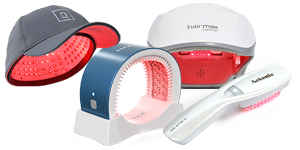
Hairmax offers multiple FDA-cleared laser devices designed to deliver consistent therapeutic energy while accommodating individual lifestyle preferences. They include:
-
Hairmax Laser Caps
Hairmax Laser Caps provide full-scalp coverage through a wearable, hands-free design. They allow you to undergo treatment sessions discreetly while ensuring uniform laser distribution across thinning areas. You can get our Hairmax PowerFlex 272 Laser Cap to help with hair regrowth.
-
Hairmax Lumina Helmet
The Lumina Helmet is engineered for structured, comprehensive scalp coverage. Its design promotes consistent energy delivery across larger regions affected by miniaturization.
-
Hairmax LaserBands
The Hairmax LaserBands are designed for efficient sessions and flexible targeting. You can glide the band across sections of the scalp to ensure complete coverage while maintaining concentrated laser exposure.
-
Hairmax Laser Combs
Hairmax LaserCombs feature patented hair-parting teeth that separate strands during treatment. This ensures direct scalp exposure and optimal penetration of laser energy to living follicles.
All Hairmax devices use medical-grade lasers and are designed to promote hair growth in individuals experiencing androgenetic alopecia.
Hair Growth Cycle Optimization
Understanding the hair growth cycle is essential when addressing follicle shrinkage reversal.
-
Anagen (Growth Phase)
This active growth phase typically lasts between three and seven years in healthy follicles. During pattern baldness miniaturization, anagen duration shortens significantly.
Hairmax laser stimulation helps extend the anagen phase by supporting cellular proliferation and vascular stability. Longer growth phases allow strands to increase in diameter and density.
-
Catagen (Transition Phase)
Catagen signals the end of active growth and involves the detachment of the follicle from its blood supply. Laser therapy supports vascular health during this transition, helping maintain follicle strength and anchoring.
-
Telogen (Resting Phase)
Miniaturized follicles often remain in the telogen phase longer than normal. Prolonged resting reduces density and delays regrowth.
Our technology works by shifting follicles back into the anagen stage, ensuring your hair maintains a more healthy growth cycle.
By influencing each stage of the hair growth cycle, Hairmax technology stabilizes the progression of androgenetic alopecia.
Clinical Evidence and FDA Clearance
Hairmax laser devices are FDA-cleared to promote hair growth for androgenetic alopecia. Clinical studies have demonstrated significant increases in hair density compared to sham-treated groups. These improvements were observed in both male and female participants.
FDA clearance confirms that the devices meet regulatory standards for efficacy and safety within the indicated use populations. This distinction separates Hairmax from cosmetic and non-medical alternatives
Treatment Time, Frequency, and Expected Results
Hairmax devices are designed for convenient at-home use. Typical treatment includes:
- Three sessions per week.
- Short treatment durations depending on the device’s format.
With consistent adherence to the recommended schedule, you’ll notice early reductions in shedding within weeks. You’ll also see improvements in hair texture and strand strength within three months. Visible density increases typically between four and six months.
Because androgenetic alopecia is a progressive condition, continued use is recommended to sustain results.
Is There a Treatment Window?
Hairmax laser therapy works by delivering energy directly to living follicles. For the treatment to produce visible results, a viable follicle must be present.
When thinning is addressed at the early or moderate stages of androgenetic alopecia, follicles are typically miniaturized but still active. In this stage, laser stimulation can support biological restoration.
In advanced hair loss cases where follicles have fully regressed, and scalp tissue appears smooth and shiny, laser therapy is unlikely to produce regrowth.
Understanding this treatment window allows users to set realistic expectations and achieve optimal long-term outcomes.
Integrating Hairmax Into a Hair Health Strategy
Hairmax laser therapy may be used as a standalone treatment or as part of a broader regimen that includes physician-recommended topical or nutritional support.
By improving cellular energy and vascularization, laser therapy creates a biologically supportive foundation that complements additional hair health strategies. Consistency remains essential for maintaining density improvements.
Conclusion
Hair miniaturization is the defining characteristic of androgenetic alopecia. As follicles shrink, strands become thinner, growth cycles shorten, and visible density declines. This progression, known as pattern baldness miniaturization, can continue gradually without intervention.
Hairmax medical-grade laser devices are engineered to address this process at the follicle level. By increasing cellular energy, supporting vascularization, and promoting reversal of follicle shrinkage, Hairmax technology provides a clinically proven, non-invasive solution for men and women experiencing thinning hair.
With FDA-cleared laser caps, helmets, bands, and combs, Hairmax delivers targeted, medical-grade laser therapy designed to restore thicker-looking hair and improve overall density.