Skip to content




Why Balding at 25 Happens Earlier Than Expected
Many men associate hair loss with aging, but young-onset male pattern baldness often begins earlier than many men expect. In some cases, visible thinning develops during the late teens or early twenties. By age 25, many men notice recession at the temples, thinning at the crown, or reduced density across the scalp.
This process is usually driven by androgenetic alopecia. Genetic sensitivity to dihydrotestosterone (DHT) gradually changes how follicles function. Over time, follicles shrink and produce thinner hair strands with shorter growth cycles.
The process usually begins slowly. Hair may appear less dense under bright lighting or feel thinner when styling. As follicles continue to miniaturize, the scalp becomes more visible, and the hairline may continue receding.
Because these changes happen gradually, many men delay treatment until thinning becomes more advanced. However, the biological process begins long before significant hair loss becomes visible.
The Hair Growth Cycle and Young Male Pattern Baldness
The hair growth cycle consists of three primary phases: anagen, catagen, and telogen. Healthy hair growth depends on maintaining a stable balance between these stages.
The anagen phase is the active growth stage, during which follicles produce new hair through rapid cell division. This phase determines the length and thickness of hair.
The catagen phase is a short transition period where growth stops, and the follicle begins to shrink.
The telogen phase is the resting stage, during which the follicle remains inactive before shedding the old hair and beginning a new cycle.
In young male pattern baldness, the anagen phase becomes shorter. Hair does not remain in active growth long enough to maintain thickness and density. Simultaneously, the telogen phase becomes prolonged, reducing the number of actively growing follicles.
This imbalance reduces the number of actively growing hairs on the scalp. Over repeated cycles, each strand becomes thinner and weaker. Eventually, follicles produce fine vellus-like hairs rather than thick terminal hairs.
Early hair loss in men during this stage is most noticeable in areas genetically sensitive to DHT. The temples, frontal hairline, and crown are typically affected first.
Why Early Intervention Is Critical
Early intervention is one of the most important factors in successful hair restoration. During the early stages of androgenetic alopecia, follicles remain alive and can respond to stimulation.
Once follicles become severely miniaturized, their ability to produce visible hair decreases significantly. Supporting follicle activity before significant miniaturization occurs gives follicles the best opportunity to produce thicker, healthier hair.
Premature balding prevention depends on stabilizing the hair growth cycle and maintaining active follicle function. Addressing thinning early helps preserve existing density while supporting new growth.
For men balding at 25, delaying treatment allows the biological process to continue uninterrupted. Beginning treatment early gives you the best chance of restoring density and fullness.
Cellular Energy and Hair Growth
Hair production requires significant cellular activity. Follicle cells divide rapidly during the anagen phase and require a constant supply of ATP to sustain growth.
Mitochondria within follicle cells are responsible for generating this energy. In androgenetic alopecia, reduced cellular activity limits ATP production, slowing follicle performance.
At the same time, circulation around the follicle may decline, reducing oxygen and nutrient delivery. This combination contributes to shorter growth phases and weaker hair production.
Improving cellular energy and supporting healthy circulation helps create an environment for healthy hair growth.
How Hairmax Helps Stimulate Hair Follicles
Hairmax devices use low-level laser therapy delivered through medical-grade lasers. These lasers emit focused, coherent light that penetrates the scalp and reaches the follicle root.
When absorbed by follicle cells, this energy stimulates mitochondrial activity and helps stimulate cellular activity, including ATP production. Energized follicles can sustain active growth more effectively and produce stronger hair strands.
Laser therapy has been shown to support healthy microcirculation around the hair follicle. Enhanced blood flow increases the delivery of oxygen and nutrients, supporting the biological processes required for hair production.
Through these mechanisms, Hairmax technology reactivates follicles, stabilizes the hair growth cycle, and promotes increased density and fullness.
Supporting the Anagen Phase for Thicker Hair
The anagen phase determines how long and how thick hair can grow. Extending this phase is essential for restoring density in men experiencing early thinning.
Hairmax laser therapy supports anagen activity by increasing cellular energy and improving circulation. Increased cellular energy helps support follicles during the active growth phase. and produce thicker, healthier strands.
As more follicles stay in the growth phase, density improves, and scalp visibility decreases. This leads to fuller-looking hair and stronger overall coverage.
Laser vs LED Hair Growth Technology
Energy delivery plays a critical role in hair restoration. Medical-grade laser devices and LED devices differ significantly in how they deliver light to the scalp.
Hairmax devices use focused laser energy that penetrates the follicle root. This concentrated energy efficiently stimulates cellular activity where hair growth begins.
LED devices emit dispersed light that spreads across the scalp surface. Because the energy is less focused, less light energy reaches the follicle.
This distinction is important for men seeking to reactivate their follicles and prevent premature balding.
Clinical Validation and FDA Clearance
Hairmax laser devices are FDA-cleared for the promotion of hair growth in males with androgenetic alopecia and females with Ludwig-Savin I-4, II-1, II-2 or frontal androgenetic alopecia, and Fitzpatrick Skin Types I-IV.. Clinical studies have demonstrated statistically significant increases in hair density among users of medical-grade laser therapy.
Hairmax devices are indicated for men with early to moderate thinning, including individuals classified within Hamilton-Norwood patterns and Fitzpatrick skin types I–IV.
How Men In Their 20s Can Use Hairmax
Hairmax provides a structured treatment routine designed to stimulate the hair follicles regularly. You can use these devices three times a week to deliver consistent energy to your follicles.
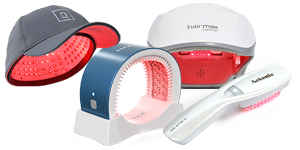
Hairmax devices are available in multiple models, including laser caps, helmets, bands, and combs. Each device delivers medical-grade laser energy directly to the scalp.
Laser caps and laser helmets provide full scalp coverage in a hands-free format. Laser bands and combs allow for targeted treatment, focusing on areas where thinning is most noticeable.
Many Hairmax devices also incorporate patented hair-parting features that help ensure laser energy reaches the scalp effectively.
This structured routine supports ongoing follicle activity and long-term stabilization of the hair growth cycle.
Timeline of Visible Results
Hair restoration occurs gradually because hair growth follows a natural biological cycle. With consistent use of Hairmax laser devices, follicles receive stimulation over time.
Early improvements may include less hair shedding and hair that feels thicker and stronger. As follicles remain active through repeated cycles, density increases and hair becomes visibly fuller.
Who Should Start Hairmax Treatment Early
Hairmax devices are designed for anyone experiencing early to moderate thinning due to androgenetic alopecia. This includes men noticing temple recession, crown thinning, or reduced density in their twenties.
The treatment is most effective when follicles are active and can respond to stimulation. Early intervention allows for greater and more predictable improvements in density and fullness.
Men experiencing hair thinning in their 20s can benefit significantly from beginning treatment before miniaturization progresses further.
Restoring Confidence Through Early Treatment
Balding at 25 can affect both appearance and confidence. By reactivating follicles and supporting the natural hair growth cycle, Hairmax devices help promote fuller, healthier hair. Increased density and improved coverage contribute to a stronger and more confident appearance.
This approach focuses on restoring natural growth through clinically validated technology.
Conclusion
Balding at 25 is often an early stage of androgenetic alopecia driven by follicle miniaturization and disruption of the hair growth cycle. Without intervention, thinning typically progresses over time, reducing hair density while follicles gradually produce finer, thinner hairs. Hairmax medical-grade laser technology helps stimulate hair follicles by supporting cellular activity, including ATP production, and healthy microcirculation. These effects help promote natural hair growth and improve hair density over time. These devices help restore the biological conditions required for healthy hair growth.
With FDA-cleared laser caps, helmets, bands, and combs, Hairmax provides a clinically proven solution for early hair loss that men experience in their twenties. Through consistent use and early intervention, these devices help combat premature balding and increase density for fuller, healthier hair.